Free Tools › Feelings Finder
Feelings wheel: find the word, then say it
Start broad, and narrow it down to the word that fits. Then turn it into something you can say.
What’s closest?
Read it from the middle out: the broad feeling, then closer, then the exact word. Tap any word to pick it.
Why put it into words
A word from the middle of the wheel, like “sad” or “angry,” could mean a lot of things. A word from the outer ring tells them what’s really going on, and gives them something they can answer. Finding the word can help you, too.
What one study found
In a brain-imaging experiment, putting feelings into words reduced the brain’s alarm response to upsetting images.
Three ways to use it
- In a text: start with the feeling and what happened. “I felt left out when the plans got made without me.” I statements
- Before a hard talk: find the word first, so you’re not hunting for it in the moment.
- When they tell you how they feel: name theirs back. “That sounds really frustrating.” Active listening
List of feelings
All 136 feeling words on the wheel, broad ones first. Tap one to use it.
- : , ,
- : , ,
- : , ,
- : , ,
- : , ,
- : , ,
- : , ,
- : , ,
- : , ,
- : , ,
- : , ,
- : , ,
- : , ,
- : , ,
- : , ,
- : , ,
- : , ,
- : , ,
- : , ,
- : , ,
- : , ,
- : , ,
- : , ,
- : , ,
- : , ,
- : , ,
- : , ,
- : , ,
- : , ,
- : , ,
- : , ,
- : , ,
How to tell someone you feel: Taken for granted, Ignored, Dismissed, Unheard, Left out, Lonely, Resentful, Disconnected, Belittled, Let down, Unsupported, Jealous
How readers named their feelings in letters to advice columns, then and now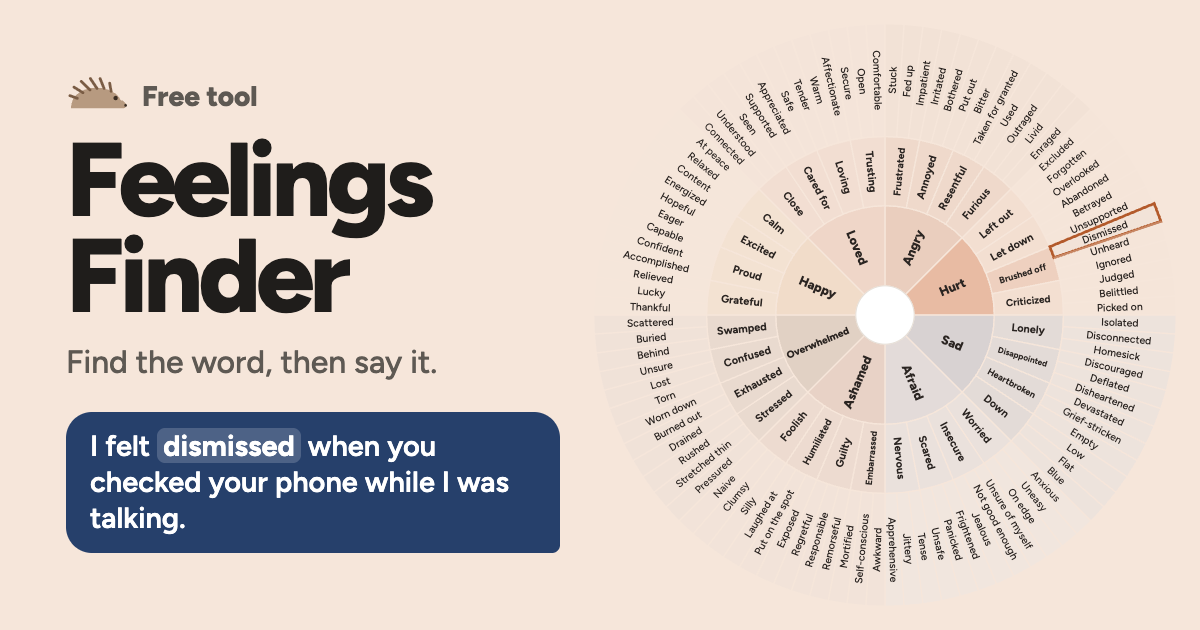
Know someone who needs this?
Common questions
What is a feelings wheel?
A circle of feeling words, broad ones in the middle and more exact ones toward the edge, so you can move from “bad” to the word that fits.
How do you use a feelings wheel?
Start in the middle with the broad feeling, then move out until a word fits. Then say it as yours, with what happened: “I felt ___ when ___.”
Is there a printable feelings wheel?
Yes. Use “Print the wheel” under the wheel. It prints the wheel with a short how-to.
Is a feelings wheel the same as an emotion wheel?
Yes, they’re two names for the same thing. No wheel is standard. This one is Porcupine’s own list of 136 words: 8 broad feelings, 32 closer ones and 96 exact ones.
The Feelings Finder is general information about communication, not therapy, counseling or professional advice. Afraid of how someone might react? Put your safety first, and talk to someone you trust.